

Product Overview
Not every situation allows for a strong-side draw—and for a lot of carriers, strong-side isn't even the best option. The FIST Kydex Cross-Draw Holster is built for opposite-side carry, positioning your firearm on your non-dominant hip with the grip angled toward your dominant hand. The result is a draw that reaches across the front of your body rather than behind your hip—a method that offers clear advantages for drivers, desk workers, anyone who spends most of their day seated, and carriers with shoulder or mobility limitations that make a strong-side reach painful or impractical.
A Different Draw for a Different Need
- Cross-Draw Cant Angle – The holster is canted specifically so the grip faces your dominant hand across the front of your body. Your draw is a natural reaching motion rather than a rearward sweep—faster and more accessible when seated or buckled in.
- Seated-Access Advantage – This is where cross draw outperforms every strong-side angle. Behind the wheel, at a desk, or in a wheelchair, your dominant hand has an unobstructed path to the grip without shifting your body, leaning, or fighting a seatbelt.
- Shoulder and Mobility Friendly – Carriers dealing with rotator cuff injuries, limited range of motion, or chronic shoulder pain often find cross draw is the only IWB method that doesn't aggravate their condition.
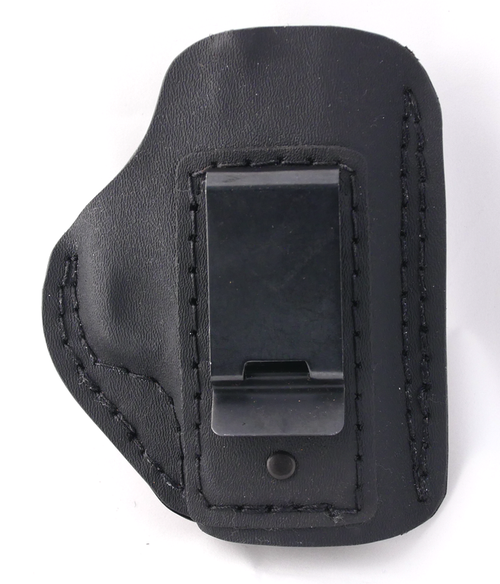
- Ultra-Thin Kydex Construction – The same slim, lightweight black Kydex used across the FIST lineup. The holster stays flat against your body on the opposite hip without creating an obvious bulge under your cover garment.
- Spring-Steel Belt Clip – Clamps firmly to belts up to 1¾" wide. The clip is positioned to keep the holster stable during the cross-body draw motion, which puts lateral force on the holster that weaker clips can't handle.
- Heat-Molded with Adjustable Retention – Formed to your exact firearm for a secure fit. Use a standard hair dryer at home to loosen or tighten the hold to your preference.
Cross draw has been a staple carry method far longer than most people realize—it predates the modern FBI cant and was the standard for law enforcement and military sidearms for generations. Today, it remains the preferred method for long-haul drivers, security professionals who work from vehicles, wheelchair users, and anyone whose daily routine involves more sitting than standing. If you've struggled with strong-side access in a car seat or fought through shoulder pain just to reach your firearm, the cross-draw position doesn't just work better—it may be the only setup that works at all.